Who was Ryszard Kapuściński?
Ryszard Kapuściński (1932–2007) — Polish reporter, writer and essayist. Who he was, where he came from, the books he wrote and why he was called the emperor of reportage.
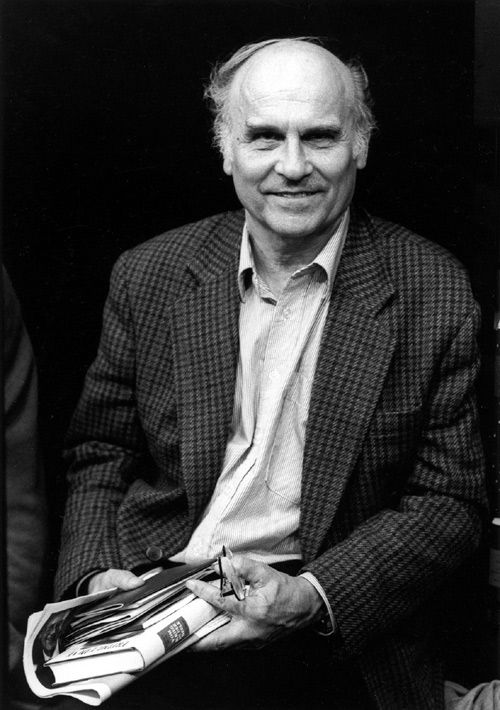
Ryszard Kapuściński (1932-2007) was a reporter, writer, essayist, and poet, as well as one of the most widely recognized Polish authors in the world. He became known as a witness to revolutions, coups, and political transformations in Africa, Latin America, and the former Soviet Union. His books combined the precision of a reporter with a literary sense of form, permanently reshaping how reportage could be written and read.
Early life and education
He was born on March 4, 1932, in Pinsk, Polesie, now in Belarus. His wartime childhood and life on a cultural borderland later informed both his memory and his sensitivity to people living on the edges of great historical change.
Between 1952 and 1956 he studied history at the University of Warsaw. Even before graduating, he was already working with the newspaper Sztandar Mlodych, where his reporting talent was quickly noticed. His early texts about postwar Poland, especially his reports from Nowa Huta, brought him his first recognition.
A reporter present where history accelerated
His foreign journeys proved decisive. In the late 1950s Kapuściński traveled to Asia and then to Africa. In 1962 he began working for the Polish Press Agency and, as a foreign correspondent, spent several years in Africa observing decolonization, the birth of new states, coups, and civil wars.
He later worked in Latin America and repeatedly returned to the Soviet Union and its former republics. He was a field reporter in the fullest sense: he traveled constantly, worked in difficult conditions, and built his writing on personal experience, conversations, and close observation.
Kapuściński often stressed that a reporter should first of all know how to listen. He was interested not only in the halls of power but also in the everyday lives of ordinary people entangled in history.
Major books
His most important books include:
- Nobody Leaves: Impressions of Poland (1962), his book debut and a collection of reports from Poland
- Black Stars (1963) and If All Africa… (1969), books rooted in his African experience
- Christ with a Rifle on His Shoulder (1975) and The Soccer War (1978), reportages from Latin America and other global flashpoints
- The Emperor (1978), one of his best-known works, a study of power through the court of Haile Selassie
- Shah of Shahs (1982), a book about the fall of the Shah of Iran and the nature of revolution
- Imperium (1993), an account of journeys across the disintegrating Soviet Union
- The Shadow of the Sun (1998), a layered portrait of Africa written after decades of reporting there
- Travels with Herodotus (2004), a late and reflective book about travel, history, and understanding the world
Alongside reportage, he also wrote poetry and essayistic books, including the Lapidarium series as well as Notes and Laws of Nature.
What made his writing distinctive
Kapuściński did not limit himself to the simple reporting of facts. He was interested in how large historical processes are reflected in individual experience: fear, hope, poverty, memory, and everyday gestures. That is why his books can be read not only as testimony to an era but also as books about human beings.
His style was economical yet vivid. He could draw the meaning of a broader phenomenon from a single scene. This is one of the reasons he came to be seen as one of the makers of modern literary reportage.
He was often associated with the idea that a good journalist must first of all be a good human being. That belief captures his professional ethic well: the reporter is not merely an observer of events, but also a responsible witness to other people’s lives.
Importance and legacy
Kapuściński’s books were translated into many languages and became part of the global canon of nonfiction. They were read not only as reportages, but also as important reflections on power, violence, memory, and the encounter with the Other.
In Poland he remains one of the central figures of modern journalism and reportage. His work still matters in debates about media ethics, the responsibility of language, and the place of nonfiction in culture.
Ryszard Kapuściński died in Warsaw on January 23, 2007. He left behind a body of work that continues to inspire reporters, writers, translators, and readers around the world.
Read more
- Full biography of Ryszard Kapuściński - his life, family, Pinsk, travels and lesser-known facts
- All of Kapuściński’s books - the complete list with summaries
- Quotes - a selection of thoughts and aphorisms
- Articles about the writer - reviews, essays, and interpretations