Study guide
The Soccer War – Summary and Analysis (themes, key issues, quotes)
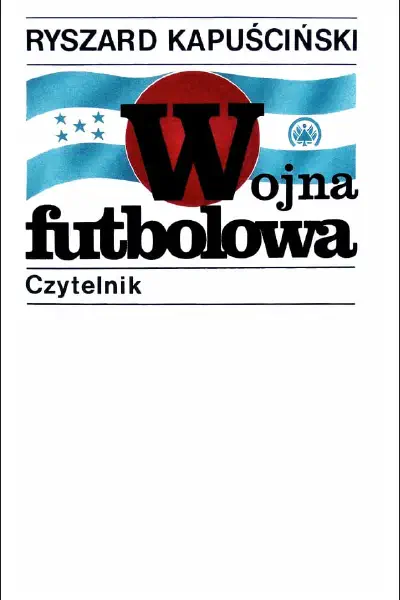
Kapuściński's The Soccer War – summary, key issues, the absurdity of war, themes, quotes and theses. A study guide to the collection of reportage from revolutions and wars.
“The Soccer War” (Wojna futbolowa, 1978) is a collection of Ryszard Kapuściński’s reportage from the conflicts and revolutions he witnessed. The title piece describes the absurd 1969 El Salvador–Honduras war. Below you will find a summary, the key issues, themes, and quotes and theses.
Summary in a nutshell
“The Soccer War” is a collection of reportage from many conflicts that Kapuściński covered as a correspondent — in Africa, Latin America and the Middle East. The book is held together by a reflection on the reporter’s work on the front line. The title piece describes the war between El Salvador and Honduras (1969), whose pretext was a football match, while the real ground was accumulated political and social tension.
Detailed summary
The title “soccer war” breaks out in 1969 after the World Cup qualifying matches between El Salvador and Honduras. Fan rioting and a wave of mutual hostility become the spark of a short, bloody war. Kapuściński shows that football was merely a pretext — beneath it lay disputes over land, migrants and influence. The reporter covers the events at close range, risking his life.
The other reportages lead through other conflicts and revolutions: decolonisation wars in Africa, coups, tensions in Latin America. From the whole emerges an image of the world of the 1960s and 70s as an arena of incessant upheavals, and a portrait of the reporter himself — a man who travels to the places others flee.
Origins and title
The book appeared in 1978 as a collection of accounts from years of work as a correspondent. The title — paradoxical, almost grotesque — deliberately sets the lightness of sport against the horror of war, in order to highlight the absurdity of a mechanism in which a football match triggers real bloodshed.
Key issues and interpretation
- The absurdity and mechanism of war. How a trivial pretext releases accumulated violence.
- Sport as politics. Football as a valve and an extension of national conflict.
- Nationalism. Collective identity as the fuel of hostility.
- The reporter at the front. The price and ethics of covering war up close.
- Propaganda and the media. How the message inflames conflict.
Themes
- War and violence – the absurdity and tragedy of conflict.
- Sport / football – pretext and catalyst.
- Nationalism – collective hostility.
- The reporter – a witness on the front line.
- Manipulation – the role of the media and propaganda.
Language and the form of reportage
It is a collection of reportage of loose composition, held together by the figure of the reporter-narrator. Kapuściński combines a dynamic account from the scene with reflection on the nature of conflict. The language is concrete, sensory, at times ironic — conveying both the horror and the absurdity of the events described.
Key quotes
“A war begins long before the first shot is fired.”
Essay theses
- A war always has a deeper ground than its immediate pretext.
- Sport can become a tool of politics and nationalism.
- The reporter is a witness who pays a price for proximity to events.
- Reportage unmasks the absurdity of violence better than a dry account.
Frequently asked questions (FAQ)
What is “The Soccer War” about? It is a collection of reportage from conflicts and revolutions; the title piece describes the absurd 1969 El Salvador–Honduras war, triggered by the pretext of a match.
What was the real Soccer War? A short El Salvador–Honduras war (1969); the pretext was World Cup qualifying matches, the ground was political and social disputes.
What are the most important themes? The absurdity of war, sport as politics, nationalism, the reporter at the front, propaganda.