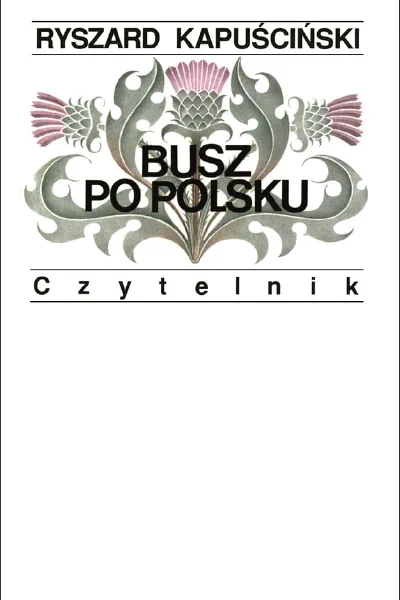
The Polish Bush
First published: 1962
Ryszard Kapuściński's debut book — reportages from Poland painting a portrait of the country in the communist era.
About the Book
The Polish Bush (Busz po polsku) is Ryszard Kapuściński’s literary debut, published in 1962 — the book that launched one of the most important careers in the history of world reportage. It gathers texts previously published in the press and arranges them into two distinct thematic circles: a Polish one and an African one.
The Polish part consists of reportages from the provinces and the peripheries — from small towns, villages and places far from the big-city centre. In them Kapuściński observes ordinary people and their unspectacular, and therefore truthful, fates. It is to this reality that the title “bush” refers: provincial Poland appears as untamed, wild territory, waiting to be discovered just like a distant continent.
The African part, in turn, is a record of the young journalist’s first expeditions to Africa during the era of decolonisation, when new, independent states were being born across the continent. These early dispatches foreshadow the author’s great African books, with The Shadow of the Sun at their head.
Already in this debut one can see the hallmarks of Kapuściński’s style: a lyrical, reflective tone, empathy for his subjects, opposition to the myth of race, and a constant search for what truly matters in human life. It is the form from which his later, mature literary reportage would grow.
Themes
- Life in communist Poland
- Rural and provincial Poland
- Human stories from the margins of history
- The art of reportage
Significance
The book established Kapuściński’s distinctive voice as a reporter: attentive to ordinary people, sensitive to social injustice, and deeply humanistic.
Where to go next
Three ways to keep going — read a sample, pick the next book, or meet the author.
Kapuscinski in his own words
Memorable lines on travel, truth and the Other — the shortest way into his way of thinking.
Read the quotes → Read nextA Kirghiz Dismounts
The early Kapuscinski on the road: after the Polish provinces come the Caucasus and Central Asia.
About the book → The authorWho was Ryszard Kapuscinski?
From a small town on the Polish border to reporting on twenty-seven revolutions — the life behind the books.
Read the biography →source: kapuscinski.info