Study guide
Lapidarium III – Analysis and Interpretation (subject matter, themes, quotes)
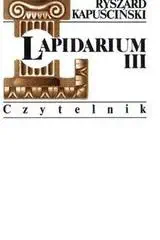
Kapuściński's Lapidarium III – analysis: composition, the subject matter of maturity and old age, themes, quotes and theses. The reporter's third volume of notes.
“Lapidarium III” (1997) is the third volume of Ryszard Kapuściński’s notebook, in which the themes of maturity and old age come more strongly to the fore. Below you will find an analysis: the composition, subject matter, themes and theses.
In a nutshell
The third volume of the cycle gathers thoughts from the second half of the 1990s. It is still fragment prose, but of a more distinct, reflective tone: maturity and old age come to the fore, along with reflection on the passage of time, the wisdom of experience, and the conscience and responsibility of the human being.
Genre and composition
The book is made up of a mosaic of aphorisms, observations and notes from reading. Each fragment can be read on its own; the whole forms a portrait of the author’s mind — curious about the world, attentive, inclined to contemplation.
Origins and place in the cycle
“Lapidarium III” is the third link in the six-volume intellectual diary (1990–2007). As the years pass, the notes become more contemplative, more often concerning the reckoning of a life and the condition of the mature person.
Key issues and interpretation
- The wisdom of experience. Old age as a time of synthesis and reflection.
- Conscience and responsibility. The ethical dimension of maturity.
- Time and transience. The motif of the passing years, ever more strongly present.
- The beauty of simplicity. Perceiving value in everyday life.
Subject matter
- Maturity and old age
- Wisdom and experience
- Historical change
- Conscience and responsibility
- Beauty in simplicity
Themes
- Time – the passage of years as the axis of reflection.
- Wisdom – the fruit of experience.
- Responsibility – toward the world and the other person.
- Everyday life – a source of beauty and meaning.
Language and form
The style remains lapidary and pointed, but the tone is more contemplative than in the first volumes. It is reading for those who value condensed thought: a short form behind which stands a whole life of observation.
Key quotes
In “Lapidarium III” Kapuściński notes thoughts about old age, wisdom and responsibility — the observations of a mature person taking stock.
See quotes by Ryszard Kapuściński →
Essay theses
- Old age can be a time of wisdom and synthesis, not only of decline.
- Maturity brings a heightened sense of responsibility toward the world.
- The aphorism allows the experience of a whole life to be condensed.
- Beauty and meaning are often hidden in the simplicity of everyday life.
Frequently asked questions (FAQ)
What is “Lapidarium III”? The third volume of Kapuściński’s notebook, from the second half of the 1990s.
What themes dominate? Maturity, old age, wisdom, conscience and responsibility.
Can it be read on its own? Yes — each volume is a separate whole.
Does it have a plot? No, it is fragment prose.