Study guide
Lapidarium II – Analysis and Interpretation (subject matter, themes, quotes)
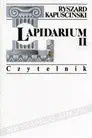
Kapuściński's Lapidarium II – analysis: composition, subject matter, themes, quotes and theses. The reporter's second volume of notes from the 1990s.
“Lapidarium II” (1995) is the second volume of Ryszard Kapuściński’s notebook — a collection of aphorisms and reflections from the turbulent 1990s. Below you will find an analysis: the composition, subject matter, themes and theses.
In a nutshell
The second volume of the cycle continues the fragment prose: aphorisms, observations, notes from reading and travel. It was written in the first half of the 1990s, during the violent transformations after the fall of communism, and bears the marks of that era — pondering life and death, love and loneliness, politics and morality in a new, destabilised world.
Genre and composition
Like the whole cycle, “Lapidarium II” is a mosaic of short forms that can be read from any point. The form remains open and heterogeneous — aphorism, digression, quotation and commentary on current events sit side by side.
Origins and the context of the era
The volume grows out of the experience of the turning point of 1989 and the first years of the new order. Kapuściński observes the world being born after the Cold War, attentively following the growing power of the media and the mechanisms of politics. It is the second link in the reporter’s six-volume private intellectual diary.
Key issues and interpretation
- The world after the turning point. The collapse of the old order and the uncertainty of the new.
- The person before the media. The mounting role of image and information in shaping reality.
- Ultimate questions. Life, death, love and loneliness as the constant core of the reflection.
- Morality in politics. Reflection on ethics in times of crisis.
Subject matter
- Life and death
- Beauty and ugliness
- Love and loneliness
- Politics and morality
- The media and the condition of the person at the end of the 20th century
Themes
- Transience – a constant theme of the cycle.
- Loneliness – the experience of the contemporary person.
- The power of the media – the new theme of the 1990s.
- Memory and the word – their weight and fragility.
Language and form
The style remains concise and aphoristic, geared toward the point. It is reading for slow savouring and meditation, not continuous narration. Each fragment opens to new meanings on the next reading.
Key quotes
In “Lapidarium II” Kapuściński records thoughts about the world after communism, about the media and about the unchanging human condition — short, polished observations.
See quotes by Ryszard Kapuściński →
Essay theses
- Fragment prose can capture an era of turning point better than continuous narration.
- The 1990s bring a new theme — the power of the media over the image of reality.
- Beneath the changeability of the world endures the unchanging human condition: love, loneliness, death.
- The aphorism is a form of mature diagnosis of the present.
Frequently asked questions (FAQ)
What is “Lapidarium II”? The second volume of Kapuściński’s notebook — aphorisms and reflections from the 1990s.
How does it differ from volume I? It is more strongly marked by the experience of the turning point after 1989 and the theme of the media.
What subjects does it raise? Life and death, love and loneliness, politics and morality, the media.
Does it have a plot? No — it is fragment prose to be read in any order.