Study guide
Black Stars – Summary and Analysis (Nkrumah, Lumumba, themes, quotes)
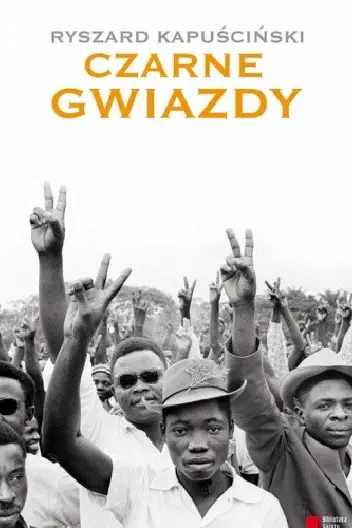
Kapuściński's Black Stars – summary, the key issues of African decolonisation, portraits of Nkrumah and Lumumba, themes, quotes and essay theses.
“Black Stars” (Czarne gwiazdy, 1963) is Ryszard Kapuściński’s first book about Africa — about the birth of independence and its leaders. Below you will find a summary, the key issues, characters, themes, and theses.
In a nutshell
“Black Stars” is a record of the young reporter’s fascination with Africa throwing off the colonial yoke. The title alludes to the black star on the flag of Ghana. At its centre stand two great and tragic figures of decolonisation: Kwame Nkrumah (Ghana) and Patrice Lumumba (Congo), portrayed against the feverish birth of new states.
Composition and content
The book gathers reportages and columns from the author’s African travels at the turn of the 1950s and 60s. It combines the concreteness of events with reflection on the fate of the continent. It is an early form of Kapuściński’s reportage — still journalistic, but already marked by empathy and engagement.
Origins and historical background
At the turn of the 1950s and 60s, Africa is experiencing a wave of decolonisation — country after country gains independence. Ghana (1957) becomes a symbol of this process, Congo (1960) of its drama. Kapuściński, a young correspondent, witnesses these changes. “Black Stars” appeared in 1963 as his African debut.
Key issues and interpretation
- The birth of independence. The hopes and difficulties of new African states.
- The tragedy of leaders. Nkrumah and Lumumba as symbols of great aspirations and their defeat.
- The legacy of colonialism. The long shadow of dependence and violence.
- The reporter’s engagement. The author takes the side of those fighting for dignity and freedom.
Characters
- Kwame Nkrumah – the charismatic leader of independent Ghana, an advocate of African unity.
- Patrice Lumumba – the first prime minister of Congo, murdered soon after coming to power; a symbol of the tragedy of decolonisation.
- Ordinary Africans – participants in and witnesses to the turning point, in whose name the struggle is waged.
Themes
- Freedom and dignity – the goal of the liberation struggle.
- Independence – the birth of new states.
- Colonialism – the background and the adversary.
- Hope and disappointment – the ambivalence of decolonisation.
- Courage – in the face of oppression and tyranny.
Language and the form of reportage
This is early Kapuściński — closer to journalism and a correspondent’s account than to his later literary prose. Yet even here one can see his empathy toward his subjects and his striving for universal reflection. “Black Stars” foreshadows the author’s great African works, with “The Shadow of the Sun” at the fore.
Key thoughts and quotes
The book is a record of the hope and drama of African decolonisation — with portraits of leaders who embodied the dream of a free Africa and paid the highest price for it.
See quotes by Ryszard Kapuściński →
Essay theses
- Decolonisation brings hope and drama at once — freedom paid for with chaos and violence.
- The fates of Nkrumah and Lumumba show the tragedy of great aspirations colliding with reality.
- The reporter takes the side of those fighting for dignity, not hiding his engagement.
- “Black Stars” foreshadows Kapuściński’s mature African reportage.
Frequently asked questions (FAQ)
What is “Black Stars” about? The birth of an independent Africa and its leaders — Nkrumah and Lumumba.
Where does the title come from? From the black star on the flag of Ghana, a symbol of freedom and pan-African pride.
Who were Nkrumah and Lumumba? The leaders of Ghana and Congo — tragic figures of decolonisation.
What are the most important themes? Freedom, independence, colonialism, hope and disappointment.