Study guide
The Kirghiz Dismounts – Summary and Analysis (key issues, themes, quotes)
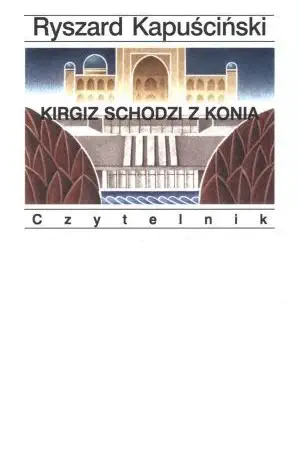
Kapuściński's The Kirghiz Dismounts – summary, the key issues of Soviet Asia and the Transcaucasus, the clash of tradition with modernisation, themes, quotes and theses.
“The Kirghiz Dismounts” (Kirgiz schodzi z konia, 1968) is a collection of Ryszard Kapuściński’s reportage about Soviet Central Asia and the Transcaucasus — about the clash of tradition with modernisation. Below you will find a summary, the key issues, themes, and theses.
In a nutshell
The book describes the Soviet republics of the Transcaucasus (Georgia, Armenia, Azerbaijan) and Central Asia (Kyrgyzstan, Uzbekistan, Turkmenistan, Tajikistan). It is a portrait of regions stretched between centuries-old tradition and modernisation imposed from Moscow. The title Kirghiz dismounting from his horse symbolises the nomad abandoning his former way of life.
Composition and content
The volume consists of reportages from various republics, arranged in two circles: the Transcaucasus and Central Asia. Kapuściński looks at the empire “from below” — through the everyday life of ordinary people, not Kremlin policy.
Origins and historical background
The reportages were written in the 1960s, when the USSR was forcing the modernisation of its Asian peripheries: industrialisation, collectivisation and the settlement of nomads. Kapuściński travels through these regions and records the effects of the changes. The book appeared in 1968.
Key issues and interpretation
- Tradition versus modernity. The clash of nomadic culture with Soviet modernisation.
- The “bottom-up” perspective. The empire seen through the eyes of ordinary people.
- Geography and climate. Harsh conditions shaping the character of the inhabitants.
- The persistence of distinctness. Beneath the uniform cloak of the USSR, distinct worlds survived.
Characters and the world depicted
The collective protagonist is the inhabitants of the republics — shepherds, workers, collective farmers, former nomads. Kapuściński portrays their hospitality, national pride and local temperament, as well as the hardship of life from the deserts of Turkmenistan to the mountains of Tajikistan.
Themes
- Tradition and modernity – the axis of the whole book.
- Nomadism – a vanishing way of life (the title symbol).
- Empire – the USSR as an imposed order.
- Everyday life – the lives of ordinary people.
- Geography – nature shaping the human being.
Language and the form of reportage
Kapuściński combines ethnographic observation with first-person reportage. He looks closely at the detail of everyday life and custom, avoiding political commentary in favour of the concreteness of human fate. From the mosaic of images emerges a thesis about the irreducible diversity of the empire.
Key thoughts and quotes
The book’s guiding thought is the conviction that beneath the uniform, grey cloak of the USSR lay fascinating, distinct worlds that the Soviet system never managed to fully unify.
See quotes by Ryszard Kapuściński →
Essay theses
- Imposed modernisation clashes with centuries-old tradition and custom.
- The empire is best seen “from below” — through the everyday life of ordinary people.
- Beneath a uniform USSR, distinct cultures and identities survived.
- The title Kirghiz is a symbol of the era of abandoning the old world.
Frequently asked questions (FAQ)
What is “The Kirghiz Dismounts” about? Soviet Central Asia and the Transcaucasus — the clash of tradition with modernisation.
What does the title mean? A nomad abandoning his former way of life for the factory or the collective farm.
What perspective does the author take? “From below” — through the eyes of ordinary people, not Kremlin politics.
What are the most important themes? Tradition and modernity, nomadism, empire, everyday life.